CURRICULUM VITAE
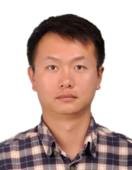 Name (in pinyin and Chinese):Xin SUN
Gender: Male
Date ofBirth:1987.06.22
Place ofBirth:Kunming
Home Address: Room 2101, Building 9,Shi Dai Jun Yuan Community, Yu Xin Rd., Chenggong District,650500, Kunming,China.
BusinessAddress:Kunming University of Science and Technology, No.727, South Jingming Rd.,Chenggong District, 650500, Kunming, China.
Work Phone: 86-871-65920508
Mobile Phone: 86-15087086855
E-mail: sunxin@kmust.edu.cn or sunxin_kmust@hotmail.com
Education:
2006.9-2010.6 B.S. in Environmental Science
Faulty of Environmental Science and Engineering,
Northwest A&F University, Xi’an, China
2010.9-2011.6 M.S. in environment engineering (Super advisor: Ping Ning)
Faulty of Environmental Science and Engineering, Kunming
University of Science and Technology, Kunming, China
2011.9-2015.6 Ph.D.program in environment engineering
(Super advisor: Ping Ning)
Faulty of Environmental Science and Engineering, Kunming
University of Science and Technology, Kunming, China
2015.06 Got phD degree
Working Situation :
2015.07- Faulty of Environmental Science and Engineering, Kunming University of Science and Technology
Research project:
1. Study on liquid-phase oxidation of synchronous desulfurization and denitrification by using nonferrous metal smelting slag (51708266), supported by Natural Science Foundation of China. (Project leader)
2. Study on liquid-phase catalytic oxidation of desulfurization by using nonferrous metal smelting slag in Yunnan,supported by Yunnan provincial personnel training project. (Project leader)
3. Simultaneous removal of H2S,COS and CS2 in yellow phosphorus tail gas with biochar carrier catalyst(51408282), supported by Natural Science Foundation of China. (Project participant)
Research interests:
1. Study on liquid-phase oxidation of synchronousdesulfurization and denitrification by using nonferrous metal smelting slag
The treatment of nonferrous metal smelting fuel gas is with great difficulty. The removal of sulfur dioxide and nitrogen oxide from an economic perspective is urgently needed to meet the increasingly stringent environmental regulations of exhaust gas emission. Thenonferrous metal smelting slag is a typical bulk industrial solid waste with environmental impact and hazard. Therefore, the comprehensive utilization of nonferrous metals melting slag is arousing great attention in the field of treatment and disposal of solid waste. To deal with the aforementioned problems, a new treatment method of nonferrous metal smelting fuel gas is proposed for synchronous desulfurization and denitrification by using the slurry of nonferrous metal smelting slag with the addition of oxygen carrier to enhance the reaction efficiency. In this research project, copper smelting slag, lead and zinc smelting slag, and tin smelting slag are chosen as raw materials to prepare the catalyst for synchronous desulfurization and denitrification. The effects of composition and structure of nonferrous smelting slag on the catalytic capacity of the prepared catalyst are to be studied. The preparation condition of the catalyst is optimized. The mass-transfer mechanism between fuel gases(sulfur dioxide, nitrogen oxide) and slurry of nonferrous metal smelting slag in the multiphase system is investigated. The mechanism of catalytic oxidation of sulfur dioxide and nitrogen oxide by using slurry of nonferrous metals melting slag is also discussed. To sum up, a new catalytic wet oxidation method of synchronous desulfurization and denitrification can be presented for treatment of nonferrous metal smelting fuel gases.
2. Research on catalysts surface pretreated with non-thermal plasma for gas purification capacity enhancement
In recent years, catalysts have been found to be highly effective for oxidation reaction processes. Previous investigation in modified catalyst preparation was only focused on conventional thermal treatment (calcination treatment). Comparatively few researches have been done on electric treatment, especially for Non-thermal plasma surface treatment (NTPST). It is well known that, due to its multifold dominances, such as fast-reacting, solvent-free and accurate-control, et al., NTPST technique has been widely introduced in the use of surface modification or treatment of materials(particularly for polymers, carbon and cotton fabrics, et al), to adapt them for specific application. On the other hand, NTPST techniques for catalyst preparation have recently attracted significant attention for catalyst design and development. It is an effective way to modify catalysts to achieve high metal dispersion without the exposure of the material to high-temperature. However, the mechanism of the improved performance of the catalysts which had been modified with plasma, the catalysts surface pretreated with non-thermal plasma for gas purification (e.g. NOx, SO2, H2S, PH3, COS, CS2, etc.) capacity enhancement is also unclear. We are endeavoring in the related research.
3. The research on environmental risk assessment system of the typical staple industrial solid wastes.
With the economical development of China, industrial solid wastes are increasing rapidly both in quantity and variety. However, the extensive mode of economy development of mass production and mass energy consumption will not be changed in China in short time, which will make China be faced with great challenge of disposing huge amount of solid wastes in decades’ time along with its high-speed development.
The mass production and stacking of staple industrial solid wastes will lead to a waste of land and resources as well as bringing potential environment risks. Additionally, it is quite difficult for quantitatively measurement because of the interaction among the elements. At present, there are no integrity assessment systems to evaluate the environmental risk of the typical staple industrial solid wastes, though a lot of environmental risk assessment methods are existed. Therefore, an environmental risk assessment system, implement quantitative evaluation, is badly required as the typical staple industrial solid wastes are in complex environmental system and a variety of uncertain risk factors. In order to solve the problem, this study build a system proposed to technical support for the environmental management of the typical staple industrial solid wastes.
Travel History:
Laos(2014);Australia(2016);New Zealand(2016)